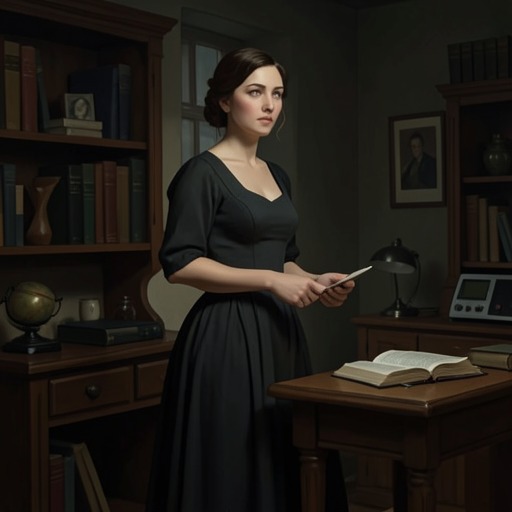
“Peace before War, Wit before Policy, Honesty before Beauty”
The Blazing World“Peace before War, Wit before Policy, Honesty before Beauty” is the Duchess of Newcastle’s compact declaration of the values behind her imaginative world-making. Its three contrasts place peace, wit, and honesty above military conquest, political calculation, and outward beauty; the ending of The Blazing-World makes the formula both a personal credo and a measure of the political world the Duchess and the Empress have fashioned.
The Maxim and Its Context
The phrase appears in the Duchess’s closing account of her authorship. She compares the rational figures of her mind with the heroes of classical and military fame—Alexander, Caesar, Hector, Achilles, Nestor, Ulysses, and Helen—and says she chose the figure of Honest Margaret Newcastle instead. Her preference is not simply for a quieter heroine: she claims greater delight and glory in forming worlds than those conquerors found in conquering the terrestrial world. The maxim names the ethical priorities that distinguish imaginative creation from imperial achievement.
That preference follows the Spirits’ counsel to turn from rule over a material world toward creating a world within the mind. They argue that possession of a vast realm cannot mean enjoying every part of it, and that glory and pleasure depend on other people’s opinions rather than bringing tranquillity to the mind or ease to the body. The Duchess accepts their advice and resolves to create a world of her own. Her eventual maxim therefore answers a specific contrast: inward invention offers freedom and pleasure without the burdens and violence of material dominion.
Peace as a Political Principle
The phrase’s first term also speaks to the Empress’s political programme. When factional disputes among the learned societies threaten disorder, the Duchess advises the Empress to restore the earlier arrangement of one sovereign, one religion, one law, and one language, making the world a united family. She warns that competing authorities, opinions, laws, ambitions, and controversies can turn division into civil conflict. In this setting, peace means more than the absence of battle; it is the condition the Duchess associates with political unity and the restraint of faction.
The Empress’s subjects themselves defend monarchy as the natural government of a political body, comparing multiple governors to a many-headed monster. They connect a single Emperor to their worship of one God and their obedience to one sovereign. Their account gives political unity a religious rationale, while the Duchess’s advice makes that unity a remedy for division. The maxim’s preference for peace thus sits within a world whose order depends on concentrated sovereignty, not on unrestricted political disagreement.
The Cost of Enforcing Peace
The narrative complicates the maxim by showing the Empress impose order through force. In her native world, she destroys invading fleets with Fire-stones and then demands that maritime nations pay tribute to the King of Esfi. When some resist, she renews the destruction of their naval forces; against nations that can live without sea trade, she threatens to burn towns and cities and dispatches Bird-men and Worm-men to attack them. She presents submission and tribute as the route to peaceful and happy life, but the route is secured by military superiority and the threat of devastation.
The Empress’s public address to the princes makes that contradiction explicit. She calls the resistance to the King of Esfi unjust, declares that Heaven has rewarded him with absolute power, and advises the other rulers to pay tribute so that they may live peaceably. Her appeal joins divine sanction to a practical warning: resistance can bring loss without victory. Against this spectacle of imposed peace, the Duchess’s closing preference for peace over war reads as a judgment on conquest, even as the story’s political order makes peace inseparable from coercive power.
Wit, Honesty, and the Work of the Maxim
The remaining contrasts sharpen the maxim’s distinction between inward value and public display. The Duchess’s chosen figure is Honest Margaret Newcastle, set against celebrated rulers and heroes whose renown comes from conquest, political skill, or beauty. The statement does not deny that the Duchess can imagine a world of factions and wars; she says she could make one. Instead, she describes a choice about what her imaginative power should value and represent. Wit and honesty, like peace, are preferred because they serve a world she can shape without reproducing the contests for dominion that mark terrestrial history.
The maxim also frames the ending’s account of authorship and sovereignty. The Duchess claims the Blazing-World and another philosophical world as creations made from the rational parts of her mind, yet she distinguishes her authorship from the Empress’s rule: the Empress is her dear Platonic Friend and already governs the Blazing-World. Rather than depose her friend to possess that realm, the Duchess says she would create another world for another friend. The closing choice turns the maxim into a practical ethic: imaginative ambition can be expansive without becoming usurpation, and friendship can limit the desire to rule.